TLS protects one query path while the selected resolver still receives the plaintext DNS question.

DoT and DoH protect the connection to the resolver you authenticate

DNS over TLS and DNS over HTTPS protect DNS traffic on the encrypted connection between their endpoints. For a typical client, that connection ends at the selected resolver. The resolver can read the question and answer, and its later queries may follow different transports. Encrypting this hop does not automatically encrypt every recursive exchange or make the resolver unable to log the names it handles. ...
October 7, 2027 · 6 min · XB Field Notes
Two transactions allocate identifiers in one order and commit in another.

Sequential identifiers reveal allocation patterns

A sequential identifier makes nearby values easy to guess. Seeing order number four thousand gives an observer a useful place to probe, and collecting identifiers over time may reveal allocation activity. It does not establish that four thousand orders exist, that all numbers represent successful purchases, or that the largest identifier committed last. Those conclusions require information that a sequence does not contain. ...

May 29, 2027 · 5 min · XB Field Notes
Three connected blocks labeled Observe, Decide, and Act.

Referrer-Policy chooses how much source URL to send

The HTTP Referer request header can tell a destination which page initiated a request. Its historical spelling differs from Referrer-Policy, the policy that controls how much source information the browser supplies. Depending on that policy and the destination, the value may include the source path and query, contain only the source origin, or be omitted. Sending the full URL to every external destination is not the modern default. ...

March 24, 2027 · 4 min · XB Field Notes
A response marked private for the user's browser only, versus public for any cache.

Cache-Control private versus shared

Storage scope is not an identity system. Cache-Control: private tells a conforming shared cache not to store a response; it does not teach a browser which application account owns the bytes. This distinction matters when a person logs out, another account logs in, and the same browser requests the same URL again. ...

October 23, 2026 · 5 min · XB Field Notes
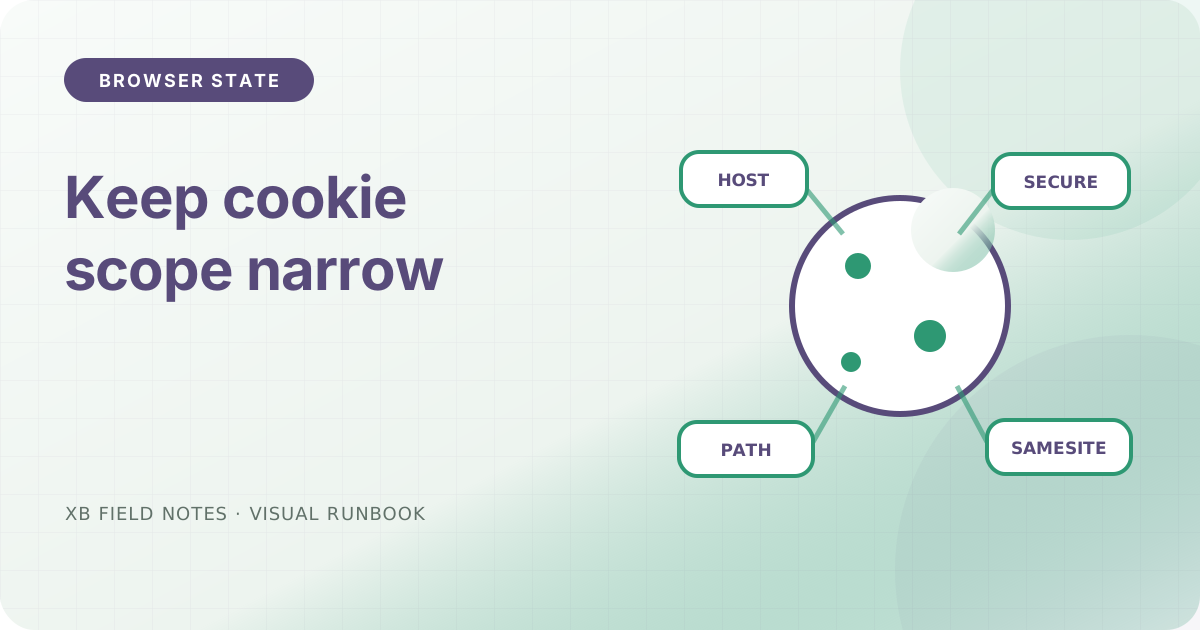
A browser cookie constrained by host, path, transport, and same-site boundaries.

Cookie scope should be narrower than the application boundary

A cookie sent to more hosts or paths than necessary enlarges the impact of every mistake at those boundaries.

June 15, 2026 · 2 min · XB Field Notes