A policy that limits how many replicas may be voluntarily taken down at once.

A PodDisruptionBudget caps how many replicas can drift

A PodDisruptionBudget is a floor, not a ceiling: it names how many replicas of a workload must stay available while something voluntarily takes the rest away. The thing doing the taking is usually kubectl drain, a node autoscaler, or an operator compacting nodes. ...

April 10, 2027 · 5 min · XB Field Notes
A table space where deleted rows leave reclaimable gaps that get reused.

Vacuum keeps a growing database from bloating

In multi-version storage, deleting a row records the change without immediately freeing the space. Reclaiming that space is a background job, and when it is skipped the cost shows up slowly. Deleted does not mean gone Deleted rows do not vanish from a PostgreSQL table at once; they are only marked dead, and the storage they used, along with older versions still needed by other transactions, stays until someone reclaims and reuses it. That is why a table can keep growing in size even when its live row count stays flat, and why a long-running transaction can pin old versions and balloon a database that is quiet on writes. The insight to take away is that reclaiming is not a side effect of deleting; it is a separate, recurring job. ...
August 16, 2026 · 5 min · XB Field Notes
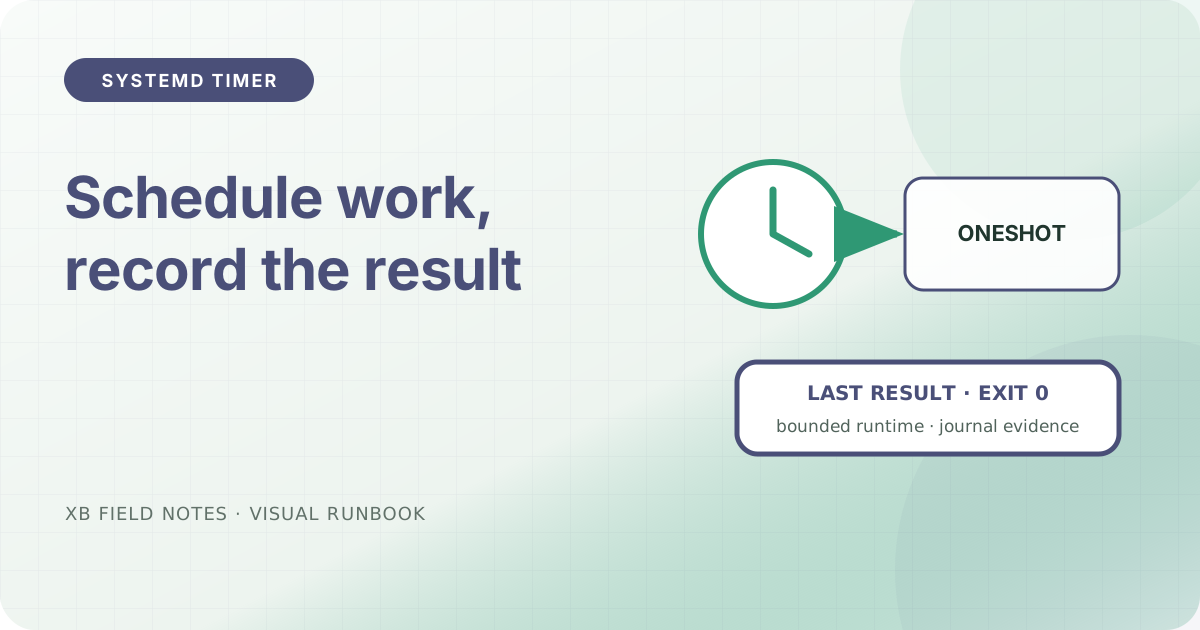
A maintenance task connected to a clock, bounded runtime, and journal result.

A maintenance timer should leave its last result visible

Scheduling is only half the job; operators also need to see when the task last ran and how it ended.

August 4, 2026 · 2 min · XB Field Notes