Three connected blocks labeled Observe, Decide, and Act beside a two-line heading.

CORS controls whether a script can read a response

Cross-Origin Resource Sharing lets a server opt into exposing a response to scripts from another origin. An origin consists of scheme, host, and port; two services on different ports can therefore be cross-origin even on the same machine. The browser evaluates the CORS response headers for the requesting page. This mechanism does not authenticate that page’s user or turn the endpoint into a private network service. Same-site cookie rules use a different boundary from same-origin response access, so similar-looking hostnames are insufficient to reason about both. ...
September 13, 2026 · 5 min · XB Field Notes
Title card reading Same effect, not the same reply beside Observe, Decide, and Act panels.

HTTP idempotency makes retries safe

HTTP idempotency concerns the intended effect of repeating an identical request, not whether every response looks the same. This distinction matters when a connection closes after the server applies a change but before the client receives the answer. Repetition can be appropriate, but only within the operation’s actual semantics and the client’s retry policy. ...

August 26, 2026 · 6 min · XB Field Notes
Observe, decide and act panels beside the caption Shared budgets need atomic checks.

Rate limiting is a shared budget

A rate limit is a budget for admitted work, defined by its unit, identity, scope, and time rule. “Five requests” is incomplete without saying whose requests, across which endpoints and workers, during which interval, and what happens after exhaustion. A shared counter helps only when every relevant admission uses the same authoritative decision. ...

August 22, 2026 · 7 min · XB Field Notes
Health checks need a question, beside an observe-decide-act flow on a pale grid.

Health endpoints answer a question

A health endpoint is an input to an operational decision, not a universal certificate that a service works. A small endpoint returning 200 can be useful when its consumer needs exactly that limited evidence. Problems begin when operators interpret “this handler answered” as “every customer request will succeed.” ...

August 19, 2026 · 6 min · XB Field Notes
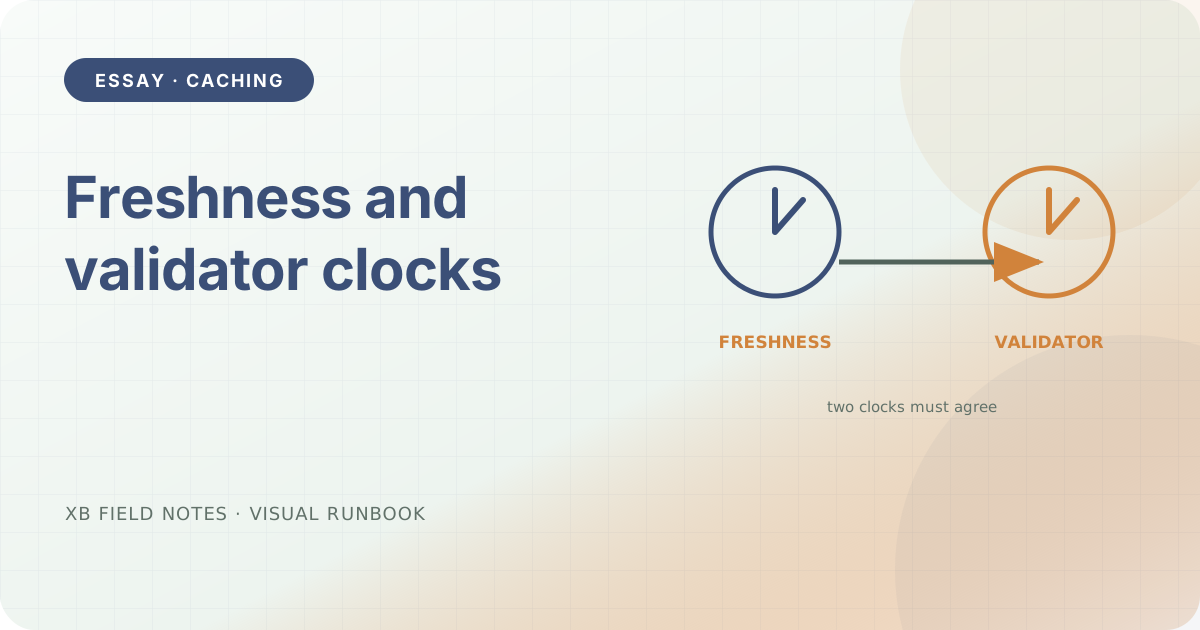
Two clocks labelled freshness and validation with an ETag between them.

Freshness and validation in the two-clock cache model

A cache is only as coherent as the pair of conditions your headers make explicit.

August 14, 2026 · 4 min · XB Field Notes
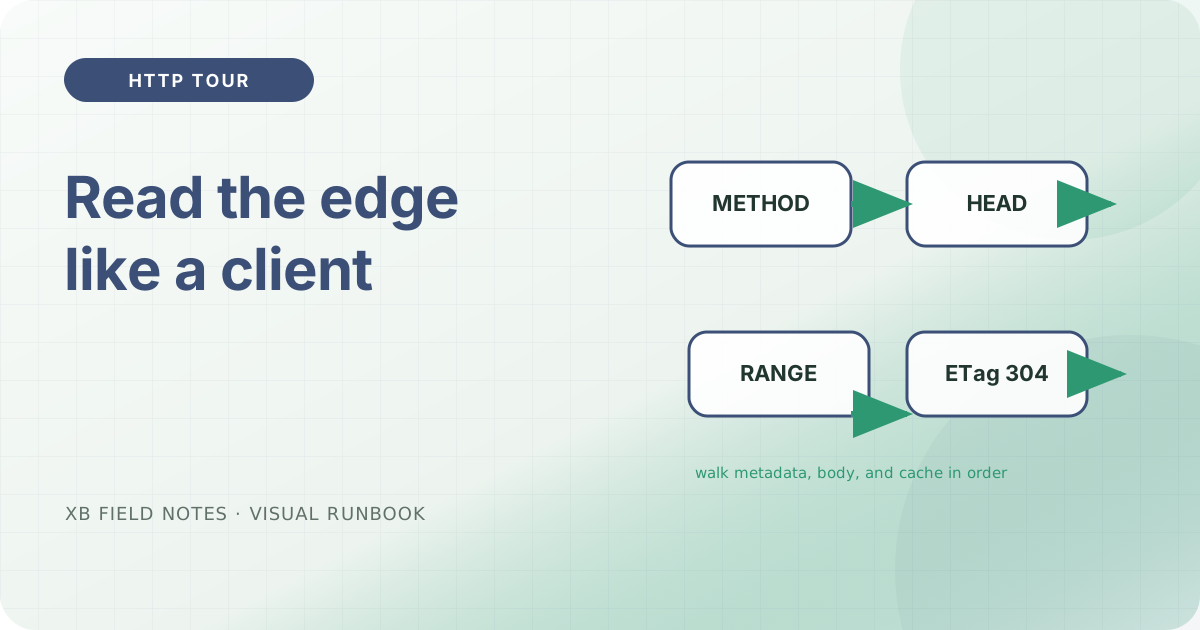
A client walking through the response metadata a live edge returns, from method to range and cache.

Read a live edge the way a client does

Walk a live origin from method to body to cache, and leave with checks you can reuse.

August 7, 2026 · 8 min · XB Field Notes
Observe-decide-act boxes beside the message: Follow by policy, keep the method.

Redirects are promises about where

A redirect is a response that asks a client to make a new request at a different target. Its Location field and status code describe both destination and method behavior. Browsers often follow redirects automatically, but a library can stop, inspect, or reject them. Treat every hop as observable protocol data: the final page alone cannot tell you whether a POST became a GET, whether credentials crossed an origin boundary, or whether a loop consumed the retry budget. ...

July 28, 2026 · 7 min · XB Field Notes
An observe-decide-act diagram beside the words Compression is content negotiation.

Compression negotiation is content negotiation

HTTP compression selects a coded representation, not a new media type. Gzipped text remains text after decompression. A useful check therefore asks three questions: was the coding acceptable, did the transfer become smaller, and did decoding recover the intended bytes? A compression checkbox or a successful status code cannot answer all three. ...

July 21, 2026 · 5 min · XB Field Notes