A distributed registry that only ever points to reachable instances

Consul keeps a live map of healthy services

A service registry is only as useful as its honesty. Consul keeps a catalog of registered instances and attaches health checks to them, so a caller asking where a healthy instance of a service lives gets an answer that changes as reality changes. Registration is trivial; the check is the whole product, because a registry that lists dead instances is worse than a static list — it actively routes traffic into a hole. ...
April 6, 2028 · 4 min · XB Field Notes
Two probes that divide traffic and restart policy.

Liveness and readiness tell Kubernetes how the Pod feels

A slow start is not a dead process: readiness shields traffic while liveness only cares about keeping the process alive. Teams wire a single HTTP endpoint into both probes, and then every slow dependency becomes a restart loop — the app needs time, liveness refuses to grant it. Two probes exist because “not ready” and “dead” demand opposite responses: one asks for time, the other for a restart. ...

July 14, 2027 · 4 min · XB Field Notes
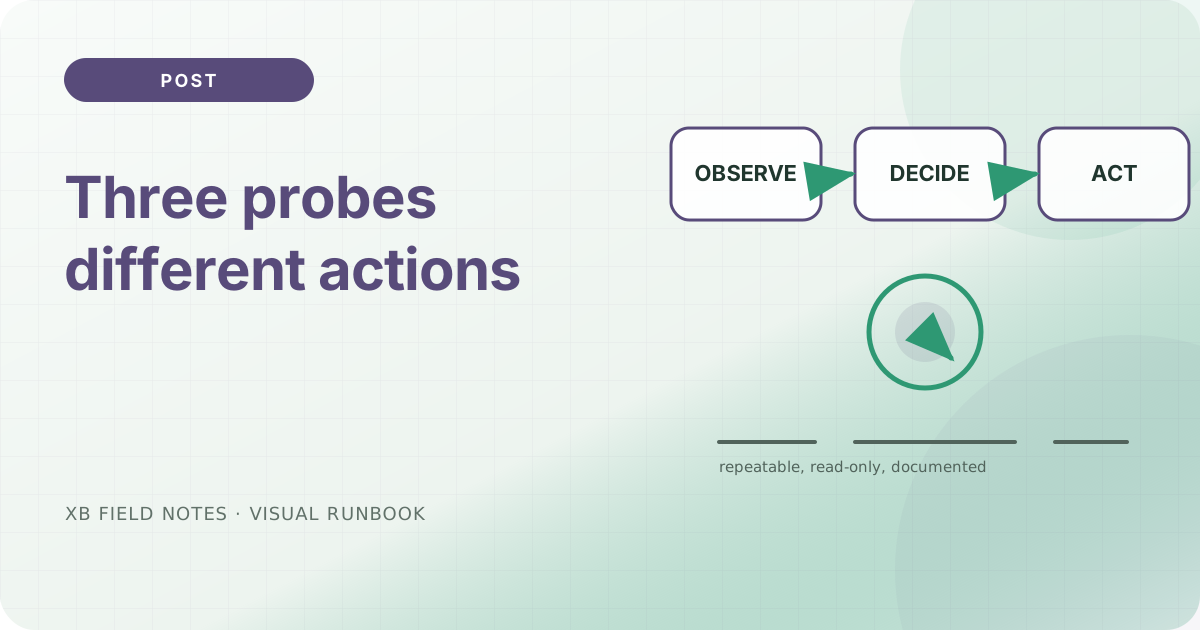
Three probes, different actions, beside an observe-decide-act flow on a pale grid.

Probes tell the platform when to act

A probe result is evidence consumed by a control loop. Kubernetes does not infer your application’s recovery strategy from a route named healthz. The probe type, result, configured thresholds, and container lifecycle determine what happens next. Treating every failure as “restart the Pod” erases distinctions that directly affect availability. ...

June 18, 2027 · 6 min · XB Field Notes