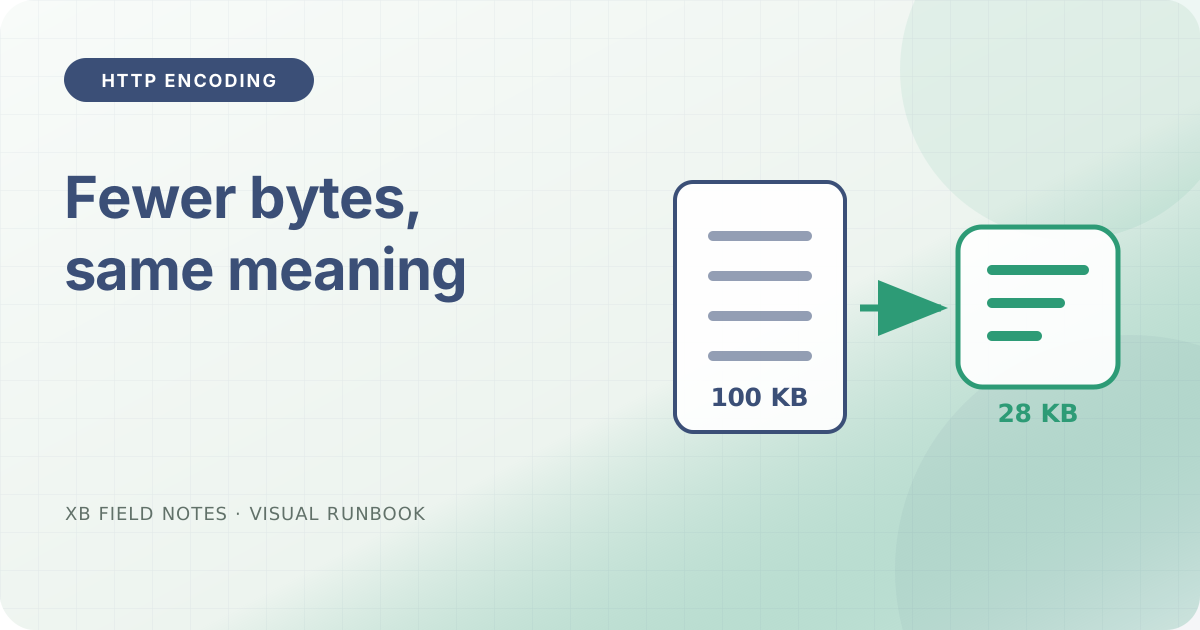
Compression saves transfer bytes, but it also creates another representation of a resource. A client announces acceptable content codings with Accept-Encoding; the server describes the applied coding with Content-Encoding.
Make negotiation visible
When a response can change according to Accept-Encoding, include that request field in Vary. This tells shared caches that a compressed response and an identity response are not interchangeable cache entries.
Compare the two paths instead of checking only a browser request:
curl -sS -D - -o /dev/null \
  -H 'Accept-Encoding: identity' https://www.example.test/
curl -sS --compressed -D - -o /dev/null \
  https://www.example.test/
Inspect Content-Encoding, Vary, Content-Length when present, and the validator. A server can use different entity tags for differently encoded representations; what matters is that conditional requests validate the same selected representation consistently.
Compress appropriate content
Text formats such as HTML, CSS, JSON, XML, and SVG usually benefit from compression. Formats that are already compressed might not. Caddy’s encode directive negotiates supported encodings and normally avoids encoding a response without an appropriate content type or minimum size.
Do not add compression solely to satisfy a score. Measure a representative response, confirm that the edge emits the intended headers, and verify that downloadable files retain the correct content type and checksum after transfer decoding.
Sources
- RFC 9110 — HTTP Semantics, content codings and
Vary, checked 2026-06-29. - Caddy
encodedirective, content encoding selection and negotiation, checked 2026-06-29. - curl manual,
--compressed, checked 2026-06-29.